How Your .EDU Can Benefit Wildly From Centralized Faculty and Course Directories


College and university websites have massive content inventories that serve many different institutional needs and user types — making information architecture tricky business.
As part of an optimized overall content strategy, centralizing key assets like the faculty directory and course catalog provides a host of surprisingly significant benefits — from getting more time back to saving money and fostering happier users that include students, parents, faculty, alumni, donors, community members, and more.
Here are a few of the most important wins your institution can expect from consolidating these digital assets on your own site.
Improved Overall User Experiences
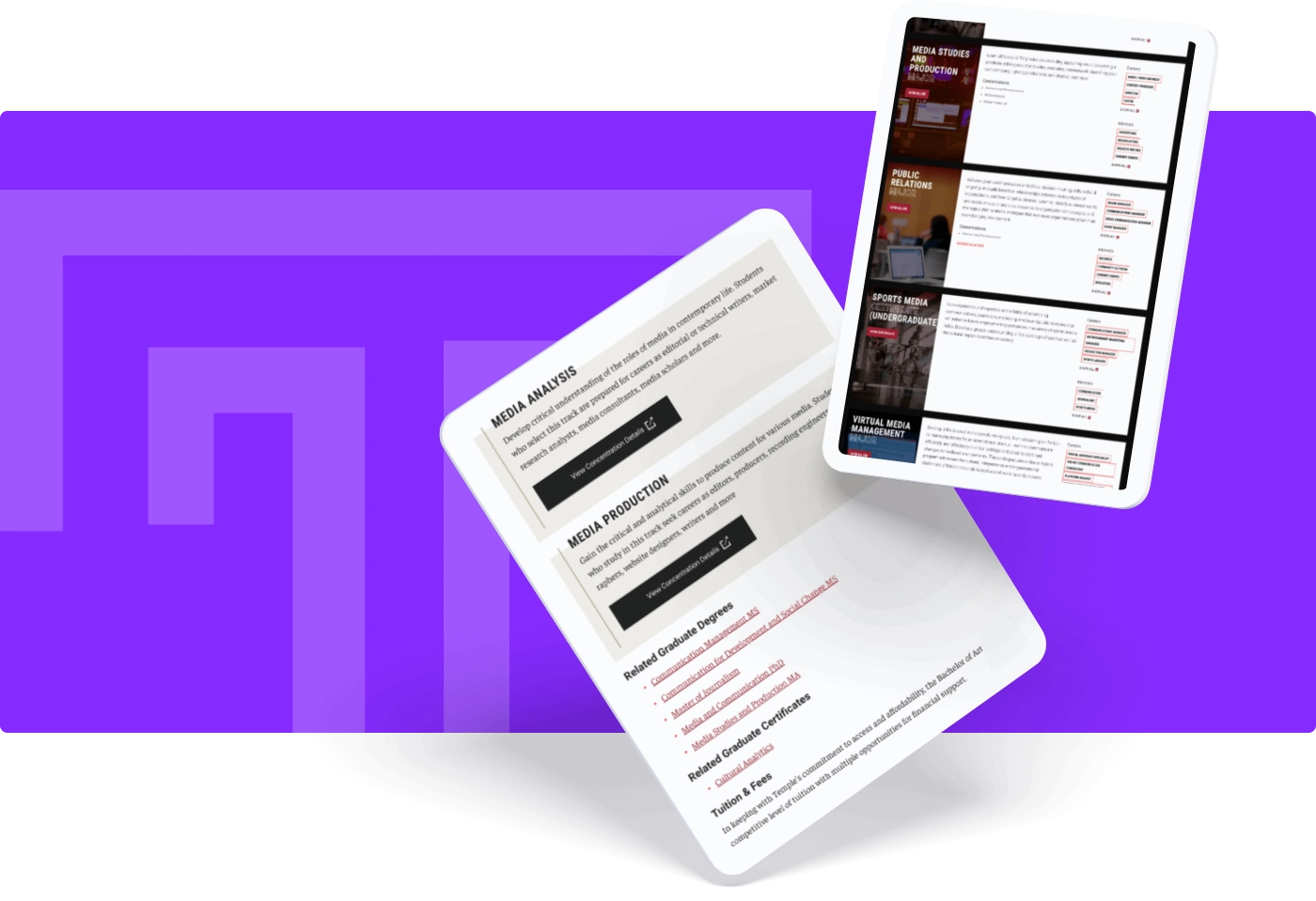
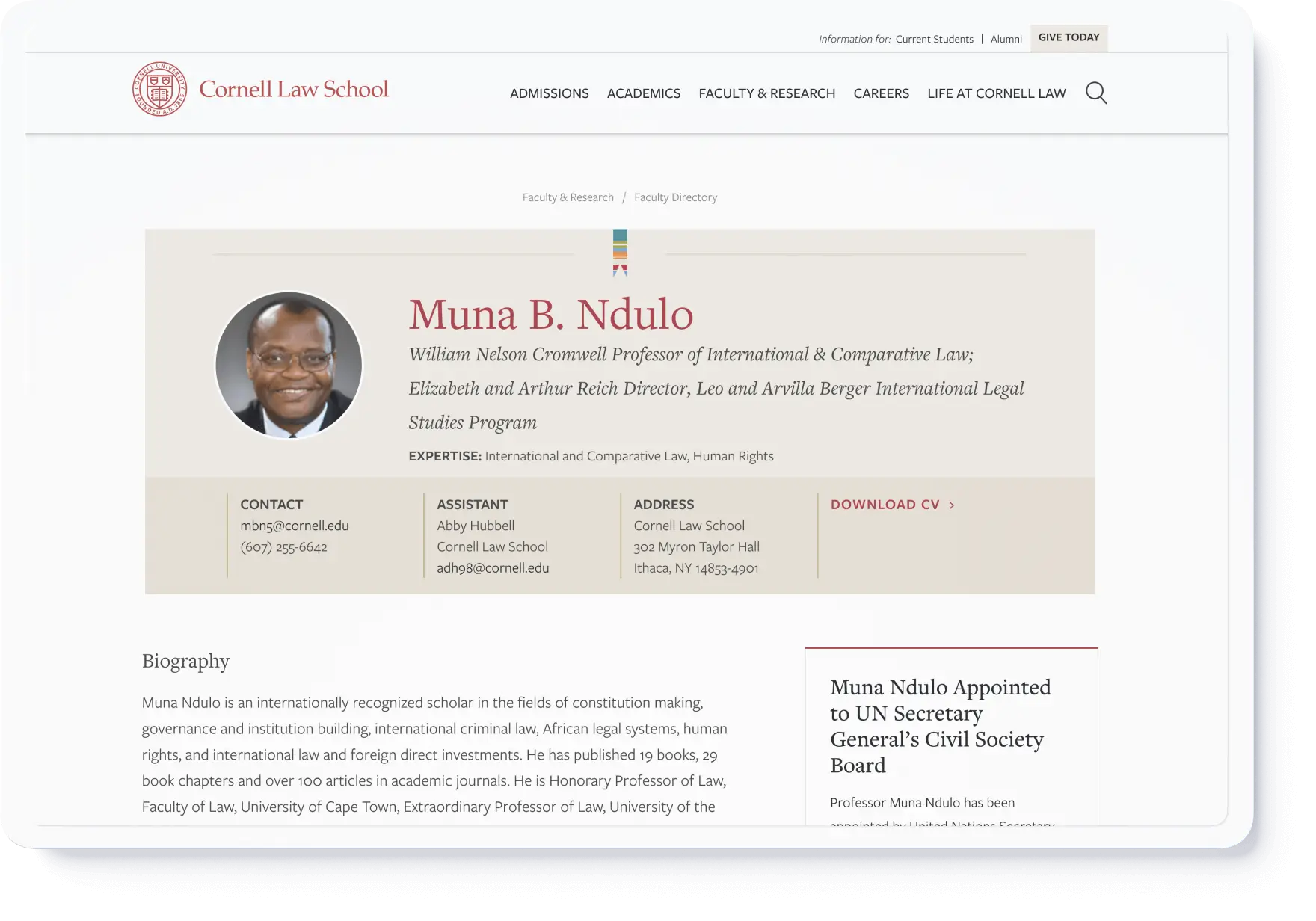
- Simplified Content Discovery — Consolidated directories provide a one-stop shop for users of all types to quickly find comprehensive information about faculty (think credentials, research interests, publications, awards, office hours, and contact information) as well as course offerings (including syllabi, schedules, prerequisites, and more) as they weigh important decisions about the next steps they want to take with your college or university.
- Opportunities to Enhance Personalized Search — Adding filters that let users search centralized faculty and course listings by department, specialty, major, or course level enables them to drill down into more relevant results and find what they’re looking for quickly.
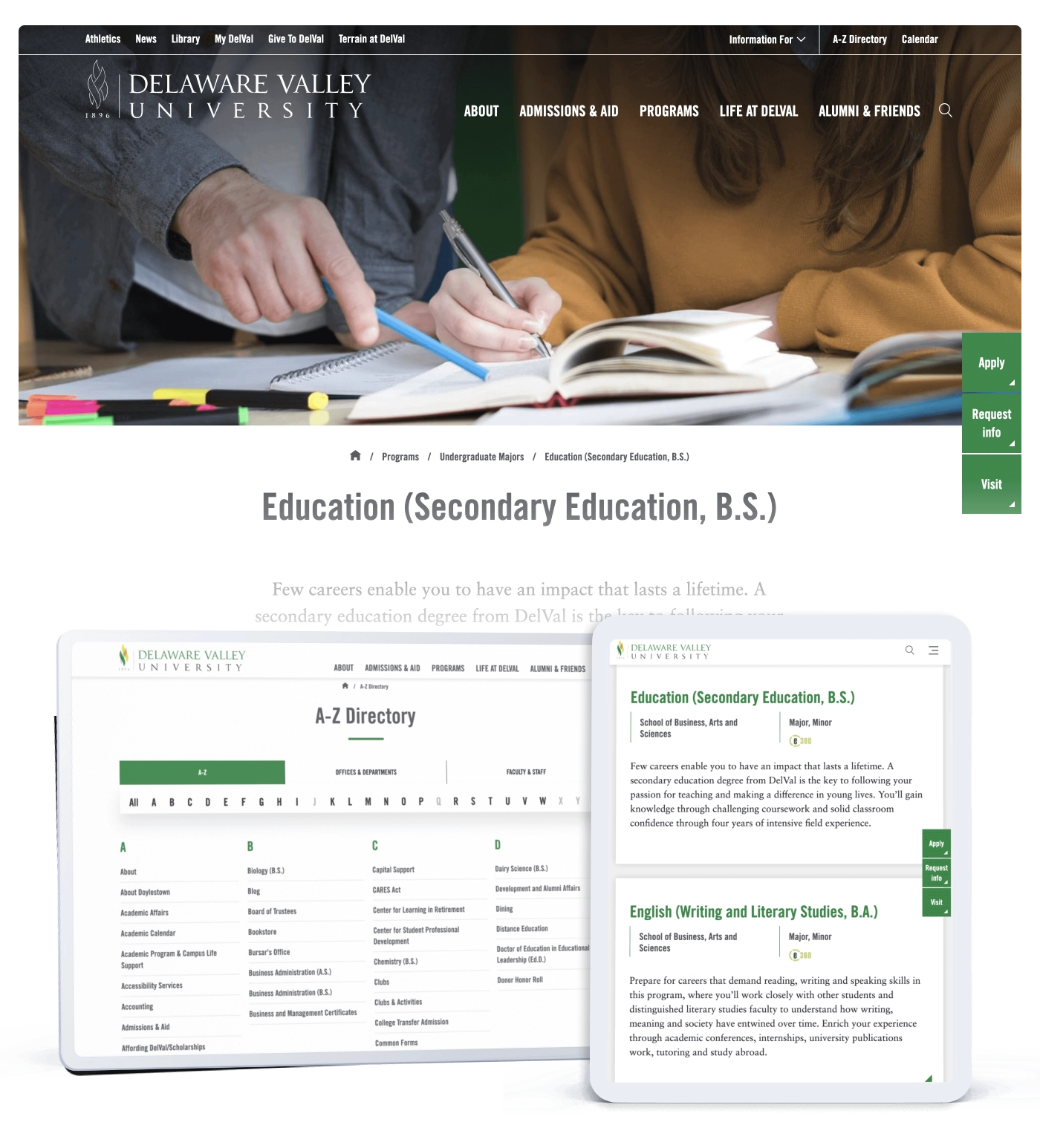
- Easier Academic Planning — Students are also better positioned to seamlessly explore course descriptions, check availability, and register for the classes they want and need.
Better Student Engagement
- Improved Connections — Being able to easily identify faculty members and advisers aligned with their academic and career interests empowers current students to identify and take advantage of vital mentorship and research opportunities, academic counseling sessions, and more.
Increased Inter-Departmental Communication and Collaboration
- Better Peer-to-Peer Visibility — Using a centralized directory, faculty can discover and connect with peers who have complementary expertise for research, teaching partnerships, and other initiatives. It also simplifies the cross-departmental coordination, scheduling, and execution of events, programs, and shared resource planning.
Faster, Cheaper, and More Accurate Site Management
- A Command Center for Centralized Updates — The ability to review, approve, and update faculty and course information in a single location ensures content accuracy on your main website, and allows those changes to be instantly reflected across all related digital properties (saving time and minimizing errors in the process!).
Better Decision-Making Power, Thanks to Data-Driven Insights
- Simplified Tracking of Metrics & Trends — Gathering data about user engagement with course and faculty data helps you identify trends that help optimize scheduling and resource allocation as well as make curriculum changes that are based on your users’ preferences and your overall institutional goals.
A Boost to Your Branding and Marketing Efforts
- Increased Credibility & More Effective Recruiting — Leveraging smartly designed directories to highlight the expertise and initiatives of esteemed faculty members, in addition to broad and deep course offerings, reinforces your reputation as a leader in higher education and attracts prospective applicants and new hires.
- More Meaningful Alumni and Donor Engagement — With easier exploration of faculty, departmental, and institutional offerings and achievements, you’ll be better positioned to foster strong connections with alumni, potential donors, and community members — and keep them engaged with your site over the long term.
Need help rethinking your institution’s directories as part of your overall content strategy? Reach out to start a conversation today.
Q&A
What are the benefits of centralized faculty directories for universities?
Centralized faculty directories provide a one-stop shop for users to find comprehensive information including credentials, research interests, publications, awards, office hours, and contact details. They enable personalized search with filters by department or specialty, improve student connections to mentors, and facilitate faculty peer-to-peer collaboration across departments.
How do centralized course catalogs improve student experience?
Consolidated course catalogs let students seamlessly explore course descriptions, check availability, view prerequisites and schedules, and register for classes. Adding filters for department, major, or course level helps users drill down to relevant results quickly, making academic planning more efficient.
How does centralizing directories improve website management?
A centralized system creates a command center where you can review, approve, and update faculty and course information in one location. Changes are instantly reflected across all related digital properties, saving time, minimizing errors, and ensuring content accuracy throughout the site.
What strategic benefits do centralized directories provide for higher ed institutions?
Centralized directories enable data-driven insights by tracking user engagement to optimize scheduling and curriculum decisions. They boost branding by highlighting faculty expertise and course offerings to attract applicants, and foster alumni and donor engagement by making institutional achievements easily explorable.
Eastern Standard helps colleges and universities create compelling digital experiences. Our website design team specializes in engaging prospective students for higher education institutions. Contact us to elevate your .EDU website.